Remote Collaboration: Better than a bag of hard drives
There are plenty of competitive products in the remote media collaboration space. And while it might be easy to say that SyncDNA is competing with them, we're actually confronting a much older problem with a decidedly low-tech solution.
Whenever media is transferred between artists, producers, or specialists, it requires a lengthy process of copying files from one machine to another. It might be an exchange of physical media, or just synchronizing files through a cloud service. Either way, it creates a key friction point that doesn't really need to happen. There's no reason that we still need to stop everything we're doing to update a stakeholder or get a new performance from an artist.
A station wagon full of hard drives
In the past, media transfer was a manual and laborious process. Not much really changed from the early days until recently, other than hard drives slowly replacing tapes and reels of film.
And the reason was simple: it's hard to argue with the efficiency of simply stuffing the trunk of your car full.
Never underestimate the bandwidth of a station wagon full of tapes hurtling down the highway
For every advance in networking or storage, there's also been an increase in the amount of storage our media consumes; it's essentially a direct relationship. And while we suffer under the weight of our hard drive collections, it seems like an eternal struggle to preserve media and still manage to get the right data to the right places on time.
And that's the key issue - with this method data transfer throughput is incredibly high, but the latency is far too high - measured in days! And that also means that the cycle of feedback and iteration also takes days, making the entire process take much longer than it needs to.
Cloud storage: an incremental improvement
About two decades ago, a new technology came to dominate: cloud storage. At first it was simple FTP servers, then services like Dropbox and Google Drive became popular.
And of course, there are always content security risks when transferring sensitive data over the Internet. Countless films, shows, and albums leaked because of lax security policies, hacks, and misconfigured file shares. New technology is still emerging to make this type of transfer more efficient and secure, such as Aspera or S3.
But fundamentally, it doesn't solve the root problem - people need to collaborate in real time, and while hours is better than days it's still far too long.
The way forward
This is the fundamental problem we seek to address. The industry deserves instant remote collaboration, review, and recording, but it also needs a feedback cycle that doesn't need massive manual transfers that break our creativity.
Risk management is another key feature of SyncDNA. Encryption at rest and in transit are massive wins for content security, and are now within reach of all studios. All data that flows through our system is encrypted by the producer, and is only readable to other devices when specifically allowed.
Plus, no more hard drives banging around in the trunk of your car, and no more piles of half-finished projects to sort through.
The real savings
When you add up the real costs of an out-of-town session, it adds up fast. Gas, your time, hotel stays, and the frustration of having to deal with your city's dreadful freeway. Or even worse, dealing with an airline!
That's the real value of a true remote collaboration suite like SyncDNA: the process is streamlined and simplified, top to bottom. The biggest time and financial costs are eliminated, while the human connections are emboldened.
And most importantly, it keeps the entire workflow and process focused on the product, not the process. Technology doesn't have to be the enemy of collaboration and creativity, but act as a great enabling force.
Get started with SyncDNA today for free!
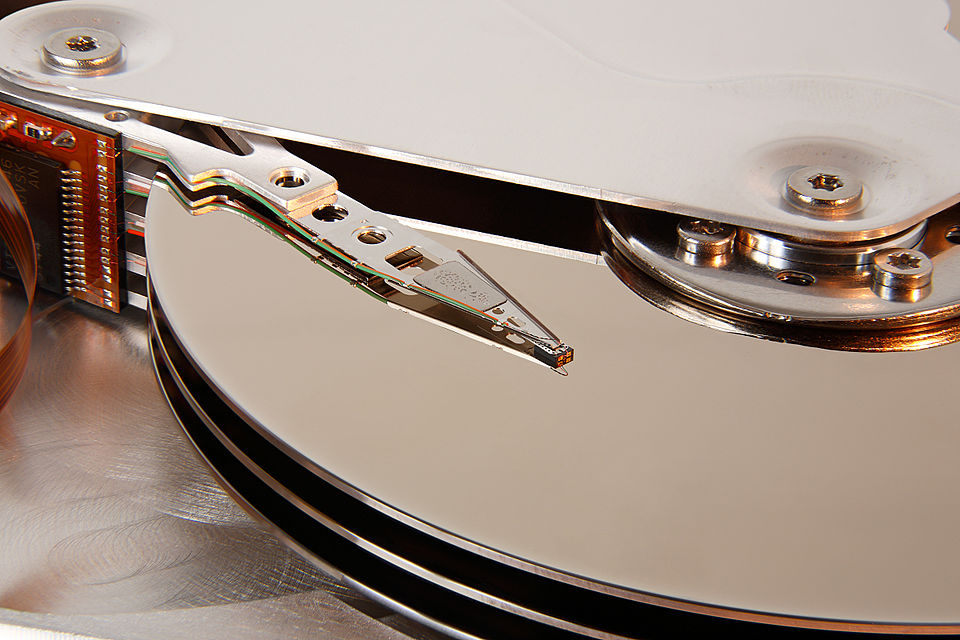
Image credit: https://commons.wikimedia.org/wiki/File:Seagate_ST33232A_hard_disk_head_and_platters_detail.jpg (Eric Gaba, CC-BY-SA 3.0)
